
Your cardiologist has told you that a heart valve needs replacing, and you live far from home, or far from the hospital you would choose. You are probably asking the same questions as every patient in your position. How long will I wait? What will it cost? Can I trust a surgeon I have never met? And how do I arrange all of this from another country?
Heart valve replacement in India is a well-established option for international patients, and most of the planning can happen before you travel. A records review, a specialist consultation by phone or video, a medical evaluation and a written treatment plan with an estimate can all be arranged from your home country.
This guide walks you through that process step by step: what to send, what to expect from an evaluation, what a good treatment plan includes, how the visa and travel side works, and how follow-up continues once you are home.
Read: https://shinonhealthcare.com/blogs/heart-surgery-types-procedures-recovery-and-risks
When is heart valve surgery needed?
Surgery is usually recommended when valve disease reaches a moderate or severe stage. According to the British Heart Foundation (BHF), faulty valves force the heart muscle to pump significantly harder. Over time, an untreated valve raises the risk of heart rhythm disorders (like AFib), heart failure, and serious infections of the heart lining (endocarditis). Damaged valves cannot repair themselves, which is why surgical repair or replacement eventually becomes necessary.
The decision to operate depends on the specific valve problem identified on your scans:
-
Aortic Stenosis (Narrowing): The flaps of your aortic valve become stiff, calcified, or fused together, narrowing the main exit from the heart. This restricts blood flow to the rest of the body, commonly causing chest tightness, breathlessness, and dizziness or fainting during simple exertion.
-
Mitral Regurgitation (Leaking): The flaps of your mitral valve fail to close tightly, allowing blood to leak backward into your lungs rather than pumping forward to the body. This backward pressure often causes fluid buildup in the lungs, shortness of breath when lying flat, persistent fatigue, and swollen ankles.
-
Rheumatic Valve Disease (Inflammation & Scarring): Stemming from childhood rheumatic fever or untreated strep infections, this condition causes long-term scarring and thickening of the heart valves, most frequently damaging the mitral and aortic valves. It is particularly common among patients and expats from South Asia, Africa, and parts of the Middle East, often requiring surgical repair or replacement at a younger age than degenerative valve disease.
Symptoms often develop gradually. Common signs include breathlessness, chest discomfort, dizziness, unusual tiredness, ankle swelling, and a fluttering heartbeat (palpitations).
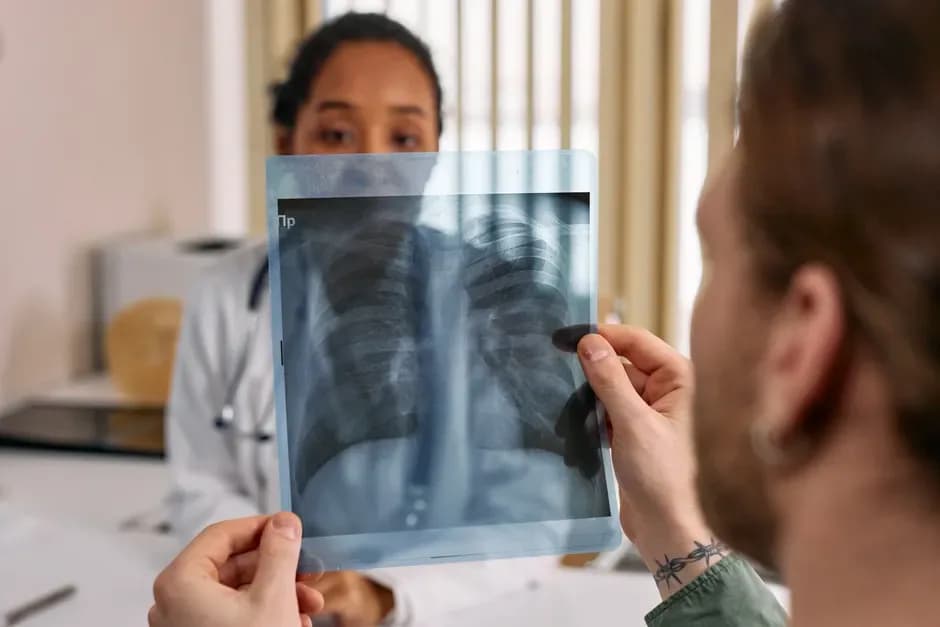
The primary test used to evaluate valve health is an echocardiogram (an ultrasound of the heart), which measures how wide the valve opens and how much blood leaks backward. Doctors may also order an ECG, chest X-ray, blood tests, a cardiac CT, or an angiogram to inspect the coronary arteries. If your cardiologist has already given you a formal echocardiogram report, you have the most vital record needed to evaluate your treatment options.
Valve repair, replacement and TAVI: the options explained
Two decisions shape your treatment plan: whether the valve is repaired or replaced, and how the surgeon reaches your heart. The choice is made with your surgeon, and the decision is yours.
| Option | What it involves | Worth knowing |
|---|---|---|
| Valve repair | The surgeon repairs all or part of your own valve | Not possible for every valve; depends on the cause of the problem |
| Mechanical valve | A durable valve made from carbon | Usually offered to younger patients because it lasts longer; needs blood thinners for life |
| Biological (tissue) valve | A valve made from animal tissue such as pig or cow heart | Usually offered to people over 60; most people do not need long-term blood thinners, but it can wear out |
| Minimally invasive surgery | Smaller cuts, such as a mini thoracotomy, partial sternotomy or robot-assisted keyhole approach | Most normal activities after about 6 weeks |
| Open-heart surgery | The breastbone is opened and a heart-lung machine is used | Recovery usually takes up to 12 weeks |
| TAVI | A catheter-delivered valve placed through a small cut, mainly for the aortic valve | Suitability is decided by the heart team |
Valve types, blood thinner needs and recovery times are from the British Heart Foundation and a UK NHS patient leaflet. Which option suits you depends on your age, the valve affected, your other health conditions and your scans. This is why a proper evaluation comes before any quote.
How to arrange heart valve surgery in India from abroad: step by step
Steps 1 to 5 happen from your home country, before you book a flight. A remote review is a first opinion, not a final one. The surgeon confirms the plan only after examining you and repeating key tests in India.
-
Gather your medical records. Collect your echocardiogram, other scans, test results and discharge summaries. The checklist in the next section shows exactly what is useful.
-
Send them for a remote review. Shinon shares your records with cardiac specialists at partner hospitals. You hear back on whether surgery looks appropriate, which approach is suggested, and whether anything is missing.
-
Speak to the surgeon. A phone or video consultation lets you ask about your valve, the options, the risks and the recovery before you commit to anything.
-
Fill any gaps in the tests. If the surgeon needs a more recent echocardiogram or scan, you can often have it done locally, which avoids delays once you arrive.
-
Receive a written treatment plan and estimate. It should name the procedure, the hospital and surgeon, the expected stay and the costs. The section after the checklist covers what to look for.
-
Plan the trip. You arrange the medical visa, your travel dates and a companion. Get your own cardiologist's agreement that you are fit to travel.
-
Complete the in-person evaluation on arrival. The team repeats key tests, such as an echocardiogram and blood tests, and may add a CT scan or angiogram. An anaesthetist reviews you. The plan can change at this stage, and you should be told why if it does.
-
Surgery, recovery and handover. After surgery you spend one to two days in intensive care, then move to a ward. A UK NHS leaflet gives about 6 to 8 days in hospital in total for valve surgery (Oxford University Hospitals); your surgeon will confirm the timing for your case. Before you fly home you receive your records and a follow-up plan.
What to send for a remote review: your records checklist
The more complete your records, the faster and more accurate the first opinion. Send what you have and note what is missing. A partial set is still worth sending.
| Document | Why it matters |
|---|---|
| Echocardiogram report, plus the images if you can get them | The main test for valve disease; shows which valve is affected, how severe it is and how well the heart is working |
| Your cardiologist's letter | Gives the diagnosis, history and the treatment already advised |
| ECG and chest x-ray reports | Show heart rhythm and the size and condition of the heart and lungs |
| Cardiac CT, MRI or angiogram reports and images, if done | Show the valve and coronary arteries in more detail |
| Recent blood tests | Include blood count and kidney function; add INR results if you take warfarin |
| Current medicines and doses | Includes any blood thinners, which affect surgical planning |
| Previous heart surgery or hospital discharge summaries | Operation notes help the surgeon plan around earlier procedures |
| Other conditions and allergies | Diabetes, kidney, lung and circulation problems all affect individual risk (Oxford University Hospitals) |
| Passport copy | Needed later for the visa and the hospital invitation letter |
Tips: Ask your hospital for scans as digital files, not only printed reports. Reports in English are quickest to review. Scan or photograph every page clearly.
What a good treatment plan should include
A treatment plan is the document you compare, discuss with your own cardiologist and decide from. Ask for it in writing, and check that it covers:
-
The diagnosis and the procedure proposed, including whether the valve is repaired or replaced and which valve type is recommended
-
The surgical approach, such as open-heart, minimally invasive or TAVI, and the reasons for choosing it
-
The hospital and the named surgeon
-
Pre-operative tests that will be repeated on arrival
-
The expected length of stay, in hospital and in India before you fly home
-
An itemised estimate, showing what is included and what is not
-
Risks specific to you, based on your age, other conditions and valve
-
The follow-up plan after you return home, including blood thinner monitoring if you receive a mechanical valve
Questions to ask the surgeon in your consultation
-
Why do you recommend this procedure and valve type for me?
-
How many operations like mine do you perform each year?
-
Is a minimally invasive approach suitable, and what are the trade-offs?
-
What are the main risks in my case?
-
What will make you change the plan after you examine me?
-
When can I fly home, and who will see me if I have a problem afterwards?
Share the plan with your own cardiologist before you decide. A good surgeon welcomes the questions.


How much does heart valve replacement cost in India?
Published estimates for the procedure itself vary widely, from about $2,100 to $13,100, because the city, hospital, valve type and approach all change the price.
| Source | Scope | India (₹) | Approx. (US$) |
|---|---|---|---|
| Manipal Cigna | Heart valve replacement; lower end in Tier 2 cities, upper end in Tier 1 cities such as Delhi, Mumbai and Bengaluru | 4,00,000 to 7,50,000 (average 4,50,000) | $4,200 to $7,900 (average $4,700) |
| Care Hospitals | Aortic valve replacement | 2,00,000 to 5,00,000 | $2,100 to $5,250 |
| Asian Heart Institute | Heart valve replacement, overall range for India | 3,00,000 to 12,50,000 | $3,150 to $13,100 |
Dollar figures use ₹95.25 per US$1 (BookMyForex, interbank rate, October 2026). The sources disagree with each other, and none says what its figure includes, so treat them as a guide to the order of magnitude, not as a quote.
What changes the price
-
Hospital and city. Private and metro hospitals generally cost more, as do hospitals with advanced equipment and accreditation.
-
The procedure. Valve type, repair or replacement, and the surgical approach all matter.
-
Your health. Other conditions, age and any complications can lengthen the stay.
-
Tests and follow-up. Diagnostics, medicines and post-operative consultations may or may not be in the quoted price.
-
Urgency. Emergency procedures can cost more than planned ones.
What to budget beyond the operation
Your total should also cover your flights, accommodation for you and a companion, your stay in India before you are cleared to fly, visa fees, and blood thinner monitoring at home if you receive a mechanical valve. Ask for an itemised written estimate that lists what is and is not included.
Want a figure for your own case? Send your echocardiogram report and Shinon will return hospital options and an itemised estimate. Get my estimate on WhatsApp.
Planning your trip: visa, length of stay and fitness to fly
Medical visa and companion
Patients travelling to India for treatment normally apply for a medical visa, and a companion applies for a medical attendant visa. As an example of the rules, the Embassy of India in Athens states that a close relative, family member or friend can travel as an attendant, with a maximum of two attendants per patient. Applicants typically provide:
-
A passport and photographs
-
A signed and stamped invitation letter from the hospital in India
-
Proof of sufficient funds, including for medical costs
-
A copy of the flight booking
-
For attendants, a declaration that they are escorting the patient, plus the patient's medical documents
The same page says visas are issued for up to six months, or longer in some cases, and that stays beyond 180 days require registration within 14 days of arrival. Rules and processes differ by nationality and by the embassy you apply through, and an online e-Visa route exists for eligible applicants, so check the current requirements on the official Indian visa portal or with your nearest Indian embassy before you apply (Embassy of India, Athens, updated 24 October 2026). The hospital's invitation letter is one of the first documents Shinon helps you obtain once your treatment plan is agreed.
How long will you stay?
Valve surgery means days in intensive care and on the ward, then a recovery period before you are cleared to fly. One UK hospital leaflet gives about 6 to 8 days in hospital in total (Oxford University Hospitals), but your stay in India will depend on your procedure and recovery. Ask the surgeon for an expected total stay in writing, keep your return flight changeable, and ask whether your blood thinner dose needs to be settled before you fly.
Are you fit to fly?
There is no single waiting period that fits everyone. The UK Civil Aviation Authority's guidance says valvular heart disease needs individual assessment by the treating physician, looking at your symptoms, heart function and lung pressures (UK CAA). Get your own cardiologist to confirm you can make the outward journey. Carry your medicines in your hand luggage, along with your records and a letter describing your condition.
Recovery and follow-up once you are home
Your care does not end when you leave India. Planning your follow-up before you travel is part of a good treatment plan.
Recovery. After minimally invasive surgery, most normal activities, including work and driving, are possible after about 6 weeks. After open-heart surgery, recovery usually takes up to 12 weeks. The wound may feel sore, itchy or numb as it heals (British Heart Foundation).
Blood thinners. A mechanical valve needs a blood thinner for life. A tissue valve usually does not. Clots form mostly on mechanical valves, particularly when blood thinner control is difficult, and these medicines can cause bleeding, so agree before you travel who will monitor your dose at home, and how often (Oxford University Hospitals).
Dental care. Regular dental checks are advised after valve surgery to reduce the risk of infection.
Before you leave India, ask for
-
Your discharge summary and operation notes
-
The type and model of valve that was implanted
-
Your scans and test results, including the post-operative echocardiogram
-
A written medication plan, including blood thinner dose and monitoring instructions
-
A follow-up plan, and a contact for questions once you are home
Book an appointment with your own cardiologist or GP before you fly, and give them this folder at your first visit. If you develop chest pain, breathlessness at rest or fainting, seek emergency care where you are.
How to choose a hospital and surgeon for heart valve surgery
For an operation like this, the surgeon and the cardiac team matter more than the building. Check these points before you commit:
-
Accreditation. Look for hospitals accredited by NABH, India's national hospital accreditation body, or JCI, the international standard. Accreditation shows a hospital meets quality and safety processes; it does not guarantee your outcome.
-
Cardiac surgery volume. Ask how many valve operations the surgeon and hospital perform each year, and how many of your type.
-
A full cardiac team. Valve surgery needs cardiac anaesthesia, intensive care and cardiology working together, and a hospital that offers the approach you need, whether minimally invasive, TAVI or open surgery.
-
Clear communication. You should be able to speak to the surgeon before you travel and get written answers.
-
Transparent pricing. The estimate should say what is included and what could add to the cost.
-
A follow-up plan. Ask what happens if you have a problem after you return home.
Shinon's partner network includes NABH and JCI accredited hospitals across India. Based on your reports, we shortlist hospitals and surgeons that perform your procedure and present your options side by side, so you can compare before you decide.
How Shinon Healthcare coordinates your heart valve treatment
Based in Gurugram, Shinon Healthcare has guided more than 10,000 international patients from over 40 countries, partnering with a network of more than 400 accredited tertiary hospitals across India. Coordinating heart valve surgery abroad can feel daunting, but you never have to navigate hospitals, diagnostic scans, visas, and hotel bookings on your own. A dedicated care coordinator manages every step of your medical journey from your first inquiry through your recovery at home.
Medical Records & Case Review
-
What you do: Send your recent echocardiogram (Echo), cardiac catheterization reports, blood tests, and current daily medication list.
-
How Shinon helps: A medical team reviews your files to ensure all essential scans are present, flags any missing data, and coordinates an evaluation with leading cardiac surgeons to assess valve repair versus replacement options.
Specialist Cardiac Consultation
-
What you do: Prepare your personal questions about valve types (tissue vs. mechanical), procedural approaches (open, minimally invasive, or TAVR/TAVI), and recovery timelines.
-
How Shinon helps: Arranges a direct phone or video consultation with a senior heart specialist so you can discuss your diagnosis and treatment options directly before committing to travel.
Customized Treatment Plan & Written Estimates
-
What you do: Review the surgical recommendation with your local doctor and discuss the options with your family.
-
How Shinon helps: Prepares comparable hospital choices across top cardiac centres at different price tiers, accompanied by a clear, itemized written estimate covering hospital stay, surgeon fees, and implants.
Travel, Medical Visa & Accommodation
-
What you do: Confirm your intended travel dates and decide which family companion will accompany you.
-
How Shinon helps: Supplies the official hospital invitation letter required to secure an Indian e-Medical Visa and coordinates all logistics from your home city to the hospital including airport pick-up, private transfers, and comfortable lodging and meal arrangements near the cardiac center.
In-Hospital Support During Treatment
-
What you do: Focus entirely on your operation, rest, and guided recovery.
-
How Shinon helps: A dedicated on-ground patient coordinator accompanies you during hospital admission, assists with translation and daily paperwork, visits you throughout your stay, and coordinates discharge formalities.
Discharge & Safe Handover Back Home
-
What you do: Schedule your post-travel follow-up with your local doctor and follow your prescribed cardiac rehabilitation exercises.
-
How Shinon helps: Organizes your fit-to-fly clinical evaluation, collects all digital imaging scans, operative notes, and medication schedules, and provides a structured discharge summary for seamless continuity of care with your cardiologist back home.
Chat with our medical assistant for quick guidance, scan reviews, and hospital comparisons tailored directly to your health needs.
Medical Disclaimer
This article is for general information and is not medical advice. Costs, timings and visa rules are indicative and change by patient, hospital and country. Always discuss your diagnosis and options with a qualified cardiologist or cardiac surgeon.