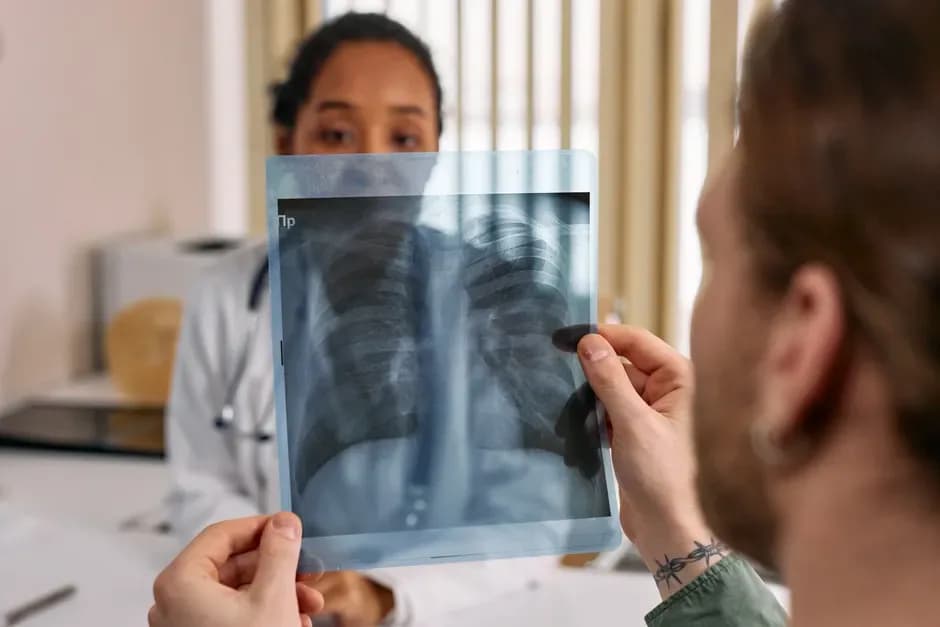

Living with sciatica, a slipped disc, or a pinched spinal nerve can quickly shrink your world. Everyday tasks like driving to work, bending down to tie your shoes, or getting a decent night's sleep turn into exhausting hurdles.
To make matters worse, getting timely treatment on the NHS requires immense patience. Trauma and orthopaedics continues to carry the single largest backlog in England, with over 860,000 treatment pathways on the list and only about 62% of patients receiving care within the target 18-week standard.
Going private at home gets you into surgery quickly, but a routine discectomy or spinal decompression comes with self-pay guide prices ranging from £8,300 to well over £11,000.
That massive gap in time and cost is why more UK patients are looking abroad. India offers internationally accredited hospitals, UK- and US-trained spine specialists, and prompt surgical dates at a fraction of the cost.
This guide breaks down what spine procedures cost, how recovery actually works, and how to tell if traveling for surgery makes sense for your condition.
Check the_ Knee Replacement in India vs UK: What Patients Should Know
Which Spine Procedures Are Performed in India?
India's top tertiary hospitals perform everything from tiny keyhole repairs to complex spinal reconstructions. The exact procedure recommended depends entirely on what your MRI scans show and how your symptoms affect your daily life.
Microdiscectomy
When a herniated or slipped disc presses directly against a spinal nerve, it often triggers sharp, burning sciatica pain that shoots down your leg. In a microdiscectomy, the surgeon works through a small keyhole incision under surgical magnification to gently trim away only the protruding piece of disc material. Because healthy back muscles and the rest of the spinal joint are left untouched, pressure comes off the nerve immediately, and most patients are up and walking within hours of surgery.
Laminectomy (Spinal Decompression)
Over time, wear and tear can cause spinal stenosis, a narrowing of the spinal canal that pinches passing nerves and leaves your legs feeling heavy, aching, or numb after walking short distances. During a decompression, the surgeon carefully removes thickened ligaments, bone spurs, or a small section of the vertebrae (the lamina) to open up the canal. Giving these crowded nerves room to breathe relieves pain and helps you walk further without constant cramping.
Spinal Fusion
If severe disc wear, joint instability, or a slipped vertebra (spondylolisthesis) causes chronic, mechanical back pain, spinal fusion provides permanent structural support. The surgeon joins two or more vertebrae using titanium screws, rods, and bone grafts to stop the painful segment from moving. As the bone naturally knits together over the following months, it forms a single stable unit that eliminates joint friction and prevents further spinal slippage.
Artificial Disc Replacement
For younger or physically active patients with severe disc degeneration, disc replacement offers a way to relieve nerve pain without stiffening the spine. Rather than locking the vertebrae together with a fusion, the surgeon removes the worn-out disc cushion and replaces it with a flexible prosthetic implant made of medical-grade metal and polymer. This preserves your natural disc height while allowing your back or neck to bend, twist, and move naturally.
Scoliosis & Deformity Correction
Abnormal or progressive spinal curves can place uneven strain on the ribcage, back muscles, and nerve roots, leading to postural collapse and chronic pain. In specialized tertiary spine centers, surgical teams realign and balance the spinal column using custom-contoured rods, hooks, and fixation screws alongside continuous real-time nerve monitoring. Straightening the spine restores balanced alignment, relieves nerve pressure, and prevents the curve from worsening.
Minimally Invasive Spine Surgery (MISS)
Whenever clinically appropriate, surgeons use keyhole techniques instead of traditional open incisions to minimize trauma to your back. Using narrow tubular retractors, the surgical team gently parts muscle fibers along their natural planes rather than cutting them away from the bone, relying on high-definition endoscopes and computer navigation for pinpoint accuracy. This muscle-sparing access keeps blood loss to a minimum, significantly reduces post-operative wound soreness, and gets you home faster.
How Much Does Spine Surgery Cost in India?
In India, the hospital procedure itself typically costs between £800 and £4,700, compared to private UK guide prices that start around £8,300 for basic discectomies.
| Procedure | India Estimate (₹) | India Estimate (£)* | UK Private Guide Price |
|---|---|---|---|
| Discectomy | ₹1,00,000-₹2,50,000 | £790-£1,970 | £8,305 (micro) to £11,005 (lumbar) |
| Laminectomy / Decompression | ₹1,50,000-₹2,50,000 | £1,180-£1,970 | Starting from £10,991 |
| Spinal Fusion (with Implants) | ₹2,50,000-₹5,50,000 | £1,970-£4,330 | Quoted on consultation (typically £15,000+) |
| Artificial Disc Replacement | ₹3,00,000-₹6,00,000 | £2,360-£4,720 | Quoted on consultation (typically £18,000+) |
Indian figures are indicative ranges from Bajaj Finserv, converted at about ₹127 per £1 (mid-market rate on 26 October 2026, BookMyForex). UK figures are published guide prices from Circle Health and Nuffield Health. A second Indian guide puts spinal fusion at ₹1,40,000 to ₹3,70,000 (Bajaj Finserv Health).
What Affects Your Final Quote?
- Number of Spinal Levels: Treating two or three disc levels requires more surgical time and hardware than a single-level procedure.
- Choice of Implants: FDA-approved imported implants (like Stryker or Medtronic) carry higher price tags than domestic options.
- Hospital & Room Preference: Premier metro hospitals (Delhi NCR, Mumbai, Chennai, Bengaluru) and single private suites vary in nightly tariffs.
- Surgical Tools: Robot-assisted systems and optical intraoperative navigation add to operating theater costs.
Budgeting for Your Whole Trip
The numbers in the table cover your hospital admission, surgery, surgeon fees, and routine inpatient medications. When planning your journey, you also need to account for return flights, medical visas, local accommodation before you can fly home, and expenses for a companion. Bundled international patient packages that include hospital care, hotel stay, and transport generally range between $5,500 and $9,000 (roughly £4,300 to £7,100).
Spine Surgery in India vs. The UK
| Factor | NHS Care | UK Private Hospitals | India (Arranged with Shinon) |
|---|---|---|---|
| Wait Times | Significant backlog; many wait months beyond the 18-week target | Quick scheduling, usually within a few weeks | Scheduled directly around your preferred travel dates once scans are reviewed |
| Out-of-Pocket Expense | Publicly funded; no direct hospital bills | High out-of-pocket costs (£8,300 to over £18,000) | Around a third to half of private UK hospital rates, including travel, private room, and recovery stay |
| Time Away from Home | Recover at home immediately after discharge | Recover at home immediately after discharge | Stay in India for 2 to 4 weeks until your surgeon clears you for travel |
| Aftercare Structure | Hospital follow-up at 6 to 12 weeks | Post-op reviews included with your consultant | Full hospital check-up before departure, followed by handover notes for your UK GP and physio |
When Staying in the UK Makes More Sense
Traveling thousands of miles for major surgery is not for everyone. You should remain in the UK if:
-
You have severe co-existing medical issues (like unstable heart disease or severe respiratory illness) that require your regular doctors close by.
-
Sitting or traveling on long flights is physically intolerable.
-
Your insurer does not cover overseas medical complications.
-
You exhibit red-flag emergency symptoms that need urgent local hospital admission.
Recovery Timelines: What Healing Actually Looks Like
Spine recovery happens in clear phases. The physical milestones below are based on standard clinical guidance from major NHS trusts (including the Royal Orthopaedic Hospital and University Hospitals Birmingham) and apply regardless of where you undergo surgery:
-
Day 1 After Surgery: Most patients get out of bed and take their first assisted steps with a physical therapist within 24 hours.
-
Weeks 1 to 2: Incision edges knit together. Surgical stitches or skin clips are usually removed between days 10 and 14.
-
Weeks 2 to 4: You can usually resume driving once you have stopped taking sedating pain relief and have full, confident control over your legs.
-
Weeks 4 to 8: Return to light desk work and gentle activities like walking, stationary cycling, or swimming. If you work at a computer, your surgeon may suggest standing up or changing positions every 20 to 30 minutes.
-
Weeks 6 to 12: Bone and deep muscle tissues have largely stabilized. You can begin progressing toward heavier tasks and structured strength work under physio guidance.
-
3 Months Onward: Return to contact sports or heavy lifting if cleared by your surgeon. Nerve healing is gradual; subtle tingling or mild weakness can take 6 to 12 months to completely resolve.
When Are You Safe to Fly Home?
Sitting upright in an airplane cabin puts extra pressure on a healing spine. While quick domestic flights can sometimes happen earlier, international long-haul travel requires caution.
Most spine surgeons advise waiting 2 to 4 weeks after a simple discectomy or decompression, and 4 to 6 weeks after a multi-level spinal fusion. Your surgeon will examine your wound healing and walking stability before signing off on your fit-to-fly certificate. For the journey home, book an aisle seat so you can stand up and stretch every hour, stay well hydrated, and wear compression socks.
Is Spine Surgery in India Safe?
Spine surgery is very safe when performed by an experienced specialist inside an accredited facility.
Leading Indian hospital networks hold NABH (India's national healthcare standard) and JCI (Joint Commission International) accreditations. These certifications verify that the hospital enforces rigorous protocols for air purity, instrument sterilization, nurse-to-patient ratios, and surgical checklists.
Understanding the Risks
Every spine operation carries standard surgical risks, whether done in London, Birmingham, or New Delhi:
-
Superficial Wound Infection: Seen in about 1 to 2 in 100 cases; deep infections occur in fewer than 1 in 100.
-
Dural Tear (Cerebrospinal Fluid Leak): Occurs in roughly 3% of discectomies and up to 8% of decompressions; usually repaired during the same procedure.
-
Temporary Nerve Irritation or Weakness: Under 1 in 100 for a first-time procedure.
-
Deep Vein Thrombosis (Blood Clots): Under 1 in 700 cases, managed with early walking and compression stockings.
-
Recurrent Disc Herniation: Around 10% of patients experience another disc bulge at the same level over a 10-year period.
Questions to Ask Before You Commit
-
How many procedures identical to mine do you perform each month?
-
Are you planning an open approach or a minimally invasive keyhole technique?
-
Which brand and country of manufacture are the screws or artificial discs you plan to use?
-
Exactly how many days after surgery will I be safe to board a long-haul flight?
-
Will I receive full English operative notes, digital MRI files, and a rehab protocol for my UK physiotherapist?
Are You a Good Candidate for Spine Surgery?
Around 70% to 80% of slipped discs settle down within 6 to 12 weeks with conservative treatment including targeted physical therapy, anti-inflammatory medications, and rest. Surgery is rarely the first step.
An operation becomes a sensible consideration when:
-
An MRI scan clearly shows a disc or bone spur pinching the nerve root responsible for your leg pain.
-
You have persistent pain, leg numbness, or muscle weakness that has failed to improve after 6 to 12 weeks of non-surgical care.
-
Pain keeps you from working, sleeping, or walking comfortably.
-
You face an agonizingly long wait for treatment and want to regain your active life sooner.
When You Need Emergency Care (Do Not Fly)
If you develop any of the following symptoms, dial 999 or go to your nearest UK A&E immediately. Do not attempt to arrange travel:
-
Loss of control over your bowel or bladder
-
Difficulty or inability to pass urine
-
Sudden numbness around your genitals, buttocks, or inner thighs (saddle anesthesia)
-
Rapidly worsening weakness in both legs
These are warning signs of cauda equina syndrome, an acute neurological emergency requiring surgery within hours to prevent permanent damage.


How to Choose the Right Spine Surgeon and Hospital in India
Spine surgery is delicate work, and your outcome depends far more on the specific hands operating on you than the hospital building itself. When researching options from the UK, use these benchmarks to narrow down your choices:
-
Surgical Qualifications & Dedicated Spine Fellowships: Look for surgeons with an MCh in Neurosurgery or an MS in Orthopaedics, followed by a dedicated long-term spine surgery fellowship (often completed in the UK, USA, Germany, or South Korea). A dedicated spine specialist focuses solely on vertebrae, spinal discs, and nerve decompression rather than general bone trauma.
-
Specialist Procedural Volume: Ask how many procedures identical to yours the surgeon performs each month. High-volume specialists (performing 300+ spine procedures annually) maintain the lowest complication rates and the most refined tissue-sparing techniques.
-
Dual Discipline Availability: The best centre house both neurosurgeons and orthopedic spine surgeons working together. Neurosurgeons excel at delicate nerve preservation within the spinal canal, while orthopedic spine surgeons specialize in structural biomechanics and hardware alignment.
-
Hospital Accreditation (JCI & NABH): Confirm that the facility holds accreditation from NABH (India's national standard) or JCI (Joint Commission International). Accreditation ensures strict air-filtration standards in the operating theaters, sterile processing, and internationally audited emergency protocols.
-
Dedicated Spinal Intensive Care & In-House Rehab: Ensure the hospital has a dedicated neuro-ICU and full-time physiotherapists who begin bedside rehabilitation within 24 hours of surgery.
Top Spine Surgery Hospitals and Cities in India
International patients typically travel to major metropolitan hubs that offer direct flight connectivity, accredited hospital networks, and experienced international patient desks:
Delhi NCR (New Delhi & Gurugram)
The primary hub for international medical travel, located within 30 to 45 minutes of Indira Gandhi International Airport:
- Medanta-The Medicity (Gurugram): A flagship tertiary center featuring intraoperative neuromonitoring, O-arm navigation, and high-volume deformity correction led by senior spine faculty.
- Indraprastha Apollo Hospital (New Delhi): A pioneer in non-fusion scoliosis management, artificial disc replacements, and robotic-assisted surgeries.
- Fortis Memorial Research Institute (FMRI, Gurugram): Known for advanced neuro-navigation suites, minimally invasive keyhole discectomies, and multi-specialty trauma units.
- Max Super Speciality Hospital (Saket, New Delhi): Renowned for endoscopic spine decompression, dynamic spinal stabilization, and robotic platforms.
- Indian Spinal Injuries Centre (ISIC, New Delhi): A specialized institute focused exclusively on spine surgery, complex trauma, and dedicated spinal cord rehabilitation.
Chennai
Often called the healthcare capital of South India, known for academic excellence and cost transparency:
- Apollo Hospitals (Greams Road, Chennai): One of Asia's most respected spine programs, pioneering 3rd-generation spinal implants, robotic navigation, and complex deformity reconstructions.
Bengaluru
India's technology and healthcare hub with specialized surgical units:
- Manipal Hospital (Old Airport Road, Bengaluru): Home to comprehensive minimally invasive spine centre and high-volume robotic surgery suites.
Mumbai
Easily accessible from the UK with direct flight connections:
- Kokilaben Dhirubhai Ambani Hospital & Nanavati Max Hospital: Both feature modern neuro-navigation suites, full endoscopic disc programs, and structured physical rehab centers.
Modern Spine Technology: Navigation, Robotics, and Endoscopy
Modern spine surgery in India relies on image guidance to make procedures gentler on muscle tissue and far more precise:
-
Endoscopic Spine Surgery (Ultra-Minimally Invasive):
Using a high-definition endoscope smaller than a pen, surgeons remove herniated disc fragments through an incision under 8 mm. Because back muscles are gently dilated rather than cut, this is often done under local or regional anesthesia with same-day walking and minimal wound discomfort. -
Computer-Assisted Navigation (O-Arm & StealthStation):
An intraoperative scanner takes live 3D images of your spine while you are on the operating table. Computer navigation tracks the surgeon's instruments like a real-time GPS, ensuring titanium screws and implants are placed with sub-millimeter accuracy. -
Robotic-Assisted Spine Surgery (e.g., ExcelsiusGPS, Mazor X):
A robotic arm locks into the precise trajectory mapped out on your pre-operative CT scan. The surgeon guides the instrument through the robotic arm, which physically prevents deviations, safeguarding nerve roots and blood vessels during complex fusions and scoliosis corrections. -
Intraoperative Neuromonitoring (IONM):
Tiny sensors monitor the electrical activity of your spinal cord and nerves throughout the entire operation. If a nerve is gently touched or stretched, the neuro-monitoring team alerts the surgeon instantly, drastically reducing the risk of nerve injury.
Which Medical Records to Send Before Traveling
You do not need to fly to India just to find out what operation you need. A thorough surgical evaluation can be completed remotely if you provide complete diagnostic files:
-
Digital MRI Scans (DICOM Files): A written MRI report is helpful, but surgeons must see the actual scan images. Send the digital DICOM folder from your hospital CD or secure link so the team can inspect disc height, nerve compression, and canal dimensions directly.
-
Dynamic X-Rays (Flexion & Extension Views): If spinal instability or a slipped vertebra (spondylolisthesis) is suspected, standing bending-forward and bending-backward X-rays show whether the joint shifts under weight.
-
NHS / Consultant Clinic Letters: Summaries detailing your symptom history, walking tolerance, reflex changes, and previous treatments (such as nerve root injections or guided physiotherapy).
-
Previous Operative Notes: If you have already had back surgery and are seeking a revision, your original operative notes and details of any previous metal hardware are essential.
-
General Medical History: A summary of routine blood pressure, heart health, diabetes management, and your current prescription medication list (especially blood thinners).
What a Spine Surgery Package Includes (and What It Excludes)
Before you confirm your journey, you should receive a written, transparent quotation outlining standard package inclusions and potential variable costs:
Typically Included in the Hospital Package:
-
Pre-operative routine investigations (blood work, chest X-ray, ECG)
-
Operating theater charges, surgeon fees, and anesthetist fees
-
Hospital room accommodation for the planned duration (private room for patient + one attendant)
-
Routine inpatient medications, surgical disposables, and dressings
-
Standard FDA-approved titanium implants (pedicle screws, cages, or artificial discs as quoted)
-
Daily in-hospital physiotherapy sessions until discharge
-
Airport pickup and drop-off in a private vehicle
Typically Excluded (Billed Separately If Needed):
-
Extra days in the hospital or ICU beyond the quoted package duration
-
Treatment for unrelated pre-existing medical conditions (e.g., specialized cardiac consultations or acute diabetic management)
-
Upgrades to specialized imported implants not covered in the original quote
-
Take-home medications and braces (lumbar corsets or cervical collars) prescribed at discharge
-
Return international airfare and medical visa application fees
-
Local hotel accommodation, meals, and daily transport for your recovery period before you fly home
How Shinon Healthcare Manages Your Entire Surgical Journey
Coordinating medical care overseas can feel intimidating. Shinon Healthcare acts as your personal care coordinator, managing every practical step so you can concentrate on getting better:
-
Send Your Scans: Share your latest MRI report, imaging discs, and consultant letters via WhatsApp or email.
-
Specialist Case Review: Leading senior spine surgeons examine your scans to determine whether surgery is genuinely necessary and which technique suits you best.
-
Transparent Hospital Options: You receive clear options comparing top hospitals, surgeon profiles, and itemised estimates showing what's included and excluded.
-
Travel & Visa Assistance: Shinon issues the hospital invitation letters required for an Indian e-Medical Visa and helps organize suitable flights and wheelchair assistance.
-
On-Ground Guidance: A dedicated coordinator meets you at the airport, handles your hospital check-in, accompanies you to consultations, and arranges clean, comfortable accommodation for your recovery companion.
-
Smooth Handover Home: Before your flight back to the UK, your coordinator ensures you have your detailed discharge summary, operative records, post-op imaging, and a structured rehabilitation plan ready for your NHS GP and physiotherapist.
Take the next step toward relieving your back pain Bypassing the waiting list and finding top-tier surgical care is easier than you think. Share your MRI report and consultant notes with us to receive:
A preliminary review from a senior spine specialist.
A transparent, itemized cost estimate (no hidden fees).
Personalized hospital and surgeon recommendations.
Mediacl Disclaimer
This guide is for informational purposes only and does not replace professional medical advice, diagnosis, or personalized treatment; all quoted costs and currency conversions are indicative estimates subject to direct MRI review and specialist evaluation.